
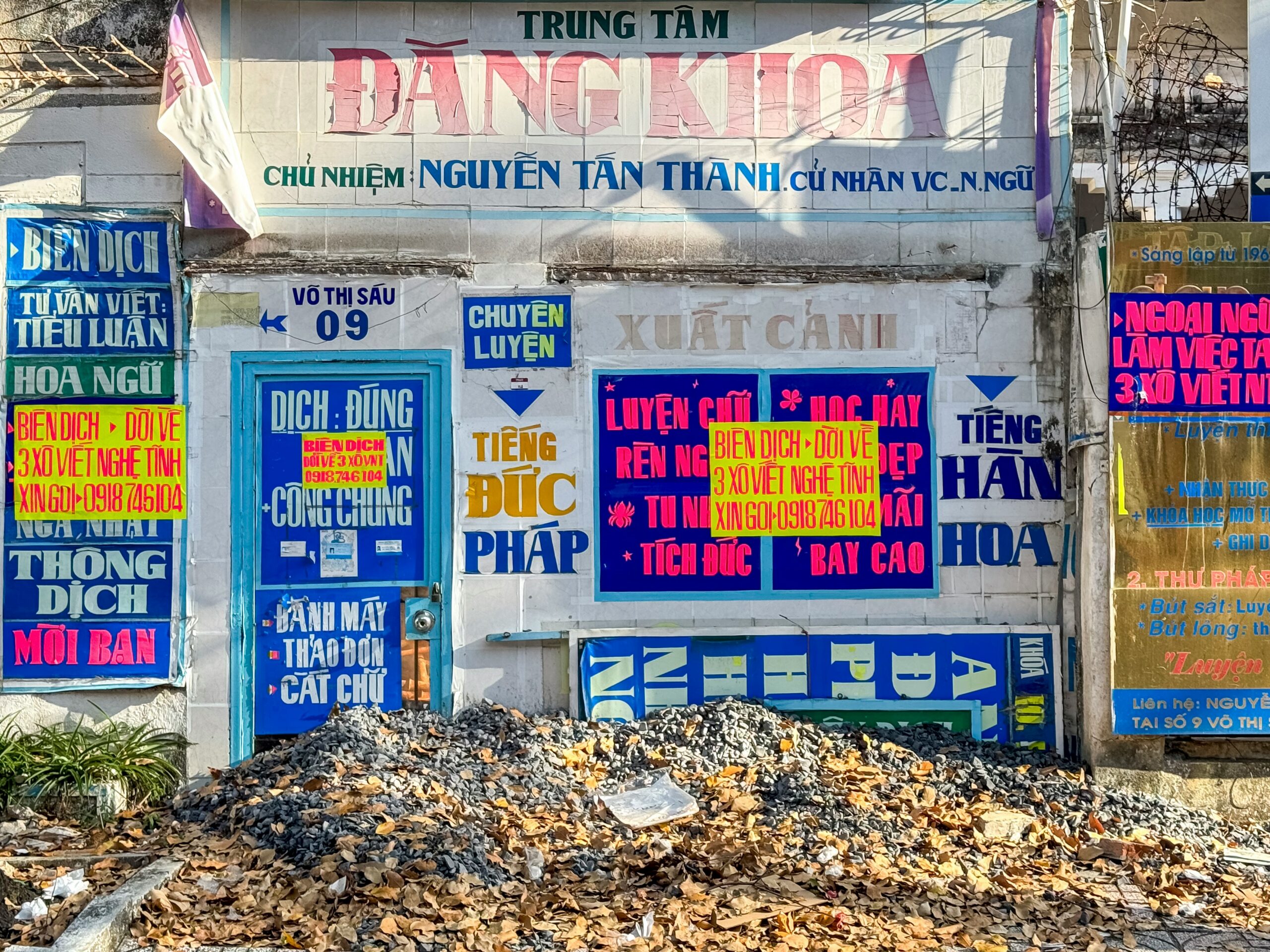
Most foreigners in Vietnam settle into a comfortable plateau of about twenty words — enough to order coffee, haggle a little, and get a laugh from a market vendor for trying. That plateau is fine for a few months. It starts to feel limiting somewhere around the six-month mark, when the gap between “getting by” and “actually understanding the place you live” becomes harder to ignore.
Vietnamese has a reputation as one of the harder languages for English speakers to learn, and that reputation is earned — but “hard” isn’t the same as “not worth attempting,” and the honest version of what’s achievable is more encouraging than most people assume before they start.
Why Vietnamese Has a Reputation for Being Difficult
Two features make Vietnamese genuinely challenging for English speakers, and it’s worth understanding them rather than being surprised by them later.
It’s a tonal language. Vietnamese has six tones (five in the southern dialect), meaning the same syllable can mean entirely different things depending on pitch pattern. “Ma” can mean ghost, mother, tomb, rice seedling, horse, or a grammatical question marker, depending entirely on tone. This is the single biggest adjustment for English speakers, whose native language doesn’t use pitch this way.
Regional pronunciation varies significantly. Northern (Hanoi), Central (Hue), and Southern (Saigon) Vietnamese differ enough in pronunciation and some vocabulary that materials built around one region can leave you understood in that region and genuinely confused in another. This is worth knowing before you pick a course or app, so you can match it to where you’re actually living.
The encouraging counterpart: Vietnamese grammar is comparatively simple. No verb conjugation, no noun gender, no complex tense system. The difficulty is almost entirely in listening and pronunciation, not grammatical structure — which changes what an effective learning approach looks like.
What Actually Works for Long-Term Residents
Prioritize listening before speaking
Because the core difficulty is tonal, not grammatical, time spent training your ear to hear tone differences pays off faster than memorizing vocabulary lists. Passive listening — podcasts, Vietnamese YouTube, background audio — trains this even when you’re not actively studying.
Find a tutor over an app alone
Apps are fine for vocabulary, but tone correction genuinely benefits from a human who can hear your mistakes and correct them in real time. Italki and local language centers (widely available in Hanoi, Da Nang, and Ho Chi Minh City) make finding an affordable tutor straightforward — often significantly cheaper than equivalent tutoring in most Western countries.
Learn in the dialect you actually live in
If you’re based in Hanoi, prioritize northern-accent materials and tutors. In Ho Chi Minh City, southern. Mixing dialects early on tends to slow progress and create confusion that’s harder to unlearn later than to avoid from the start.
Use real transactions as practice
Ordering food, negotiating at a market, giving a Grab driver directions — these low-stakes, repetitive daily interactions are some of the most effective practice available, precisely because they’re real and happen constantly. Vietnamese speakers are, in most nomad-friendly cities, generally patient with and encouraging of visible effort.
How Much Vietnamese Do You Actually Need?
Survival level (numbers, greetings, food ordering, basic directions) is achievable within a few weeks of consistent effort and covers most day-to-day needs in nomad-friendly cities where English is reasonably common.
Conversational level — enough for small talk, simple negotiations, and following the gist of a conversation not directed at you — realistically takes six months to a year of regular study and practice, and meaningfully changes how connected you feel to daily life here.
Fluency is a multi-year undertaking, realistic mainly for people planning a genuinely long-term or permanent stay, or those with a Vietnamese partner or family.
Most long-term nomads land somewhere in the survival-to-conversational range and find that’s enough to meaningfully change the texture of daily life — market vendors relax, taxi conversations become possible, and the country stops feeling quite so much like it’s happening around you rather than with you.
A Realistic Starting Point
Ten minutes a day of tone-focused listening practice, one weekly session with a tutor, and a genuine attempt at Vietnamese in every food order for the first month. Small, consistent, and built into routines you already have — this beats an ambitious study plan that collapses under the first busy work week.
→ How to Move to Vietnam as a Remote Worker or Creative
→ Expat Community in Vietnam: Where to Find Your People
→ A Digital Nomad’s Guide to Vietnamese Food
Language practice happens naturally in a community that’s actually rooted in its city. Join the NextU waitlist to find out more about our Hanoi community.



One Comment