The Digital Nomad Community in Da Nang: What It’s Really Like in 2026
Da Nang’s digital nomad community is the largest and most established in Vietnam. It’s also honest about itself in a way that the marketing copy around co-working and nomad destinations often isn’t: it’s a community of working people who happen to be in the same place, not a curated experience.
This is worth knowing before you arrive expecting something more organized or more committed. The Da Nang nomad community is organic, self-organizing, and real. It has its virtues and its limitations. This guide covers both.
The Scale and Shape of the Community
No one tracks exact numbers, but the Da Nang nomad population in 2026 is several hundred people at any given time, concentrated in the An Thương / Mỹ An area of the city. This is the neighborhood north of Helio Night Market, between the beach and the river, where the concentration of international cafés, co-working spaces, and serviced apartments has created a de facto nomad hub.
Who’s here: Primarily English-speaking nomads from the US, UK, Australia, Western Europe, and Canada. Growing numbers from Eastern Europe and Latin America. Some Asian nomads, particularly Korean and Japanese. Ages skew 25–40, with a strong contingent in their 30s.
What they do: Remote employees at tech and media companies, freelancers (design, writing, marketing, development), online business owners, English teachers on part-time arrangements, content creators.
How long they stay: Most nomads in Da Nang stay 1–3 months. A smaller cohort stays 6–12 months. A core of long-term residents (2+ years) forms the community backbone — these are the people who know everything, who organize the informal events, who remember when certain spaces opened.
How the Community Actually Organizes
Unlike some nomad hubs with formal organization, Da Nang’s community is largely self-organized through a few channels:
Facebook groups. “Digital Nomads Da Nang” and “Expats in Da Nang” are the primary channels. Practical questions (apartment recommendations, visa advice, restaurant suggestions), event announcements, selling/trading items. Join both before arriving — the group collective knowledge is invaluable.
Telegram channels. Increasingly the day-to-day channel for the more active community. Ask in any co-working space about which Telegram groups are currently active.
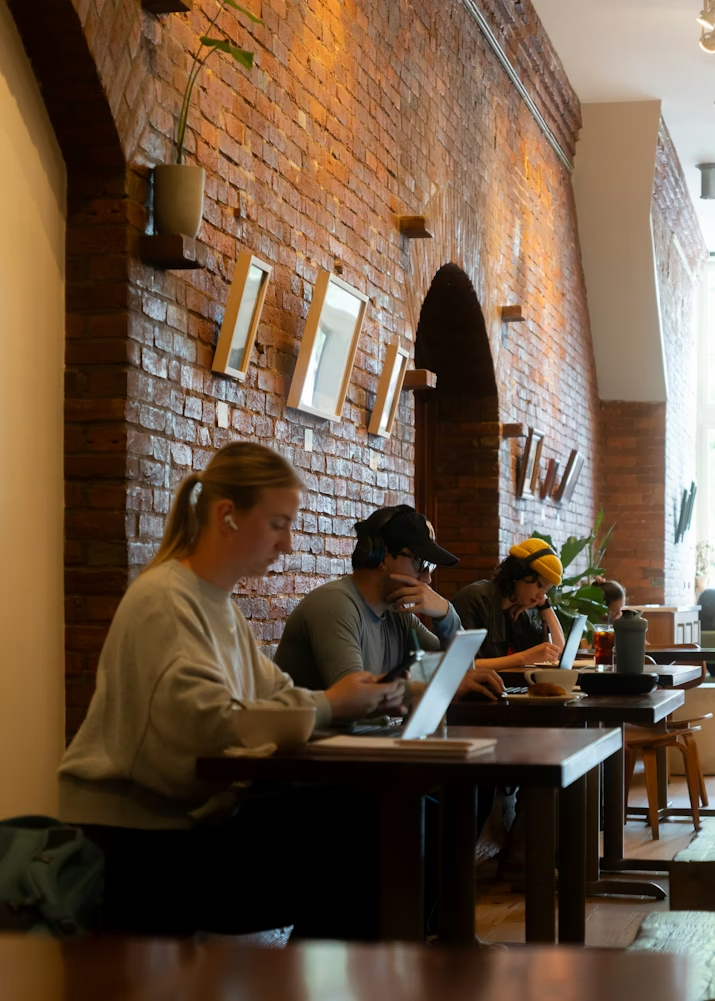
Co-working space regulars. The social glue of the Da Nang community. At spaces like Up Coworking, regulars greet each other, make coffee together, share lunch spots. This is where most nomad friendships begin.
Informal recurring events. Beach volleyball on Sunday mornings. Weekly language exchanges at various cafés. Monthly socials at beach bars. These aren’t formally organized in any central calendar — they’re word-of-mouth through the Telegram channels and Facebook groups.
The Upside: What the Community Does Well
Practical knowledge sharing. A question posted in the Facebook group about a specific visa situation, apartment area, or new co-working space gets answered within hours, often by multiple people with direct experience. The cumulative knowledge in the groups is enormous.
Ease of meeting people. This is the practical upside of density. If you arrive in Da Nang knowing no one and want to meet people, it’s genuinely easy. Sit in a co-working space for a week, join the Facebook group, say yes to the first social invitation. The entry activation energy is low.
Shared resources. Motorbike recommendations, visa agents, good dentists, trusted landlords — the community has vetted options for almost every practical need and shares them freely.
Support during difficulties. The nomad community in Da Nang is good at showing up for its members when things go wrong: illness, theft, difficult visa situations. The self-interest of a community in a foreign country creates genuine mutual aid.
The Limitations: What the Community Doesn’t Do Well
Depth of relationship. The high turnover rate means that most community relationships are pleasantly shallow. You’ll meet many people and go deep with few. The people who stay longer — 6+ months — have a different experience. But if you’re arriving for a month, manage your expectations about the kinds of friendships you’ll build.
Intellectual diversity. The community skews heavily toward tech workers and online business owners. The conversations at the beach bar are often about the same topics: visas, remote work tools, crypto, where to eat. If you’re looking for deep creative or intellectual community, you may need to look harder or create it yourself.
Expat bubble. The convenience of the An Thương expat enclave makes it easy to live an entire month in Da Nang without much contact with Vietnamese people or Vietnamese life. The city exists around the bubble; the bubble rarely engages with it. This is a choice, but it limits the quality of the experience.
Transience as an ambient state. When everyone is temporary, a certain kind of investment doesn’t happen. People don’t set up deep roots because they’re leaving in 6 weeks. The community exists in this permanent present tense that can be energizing at first and eventually a little hollow.
Getting the Most Out of It
The Da Nang nomad community rewards the people who invest in it. A few practices that experienced residents suggest:
Stay at least 6 weeks. The first two weeks are orientation. The real community experience starts in weeks 3–4, when you have regulars you see every day, a morning routine, a café where the staff know your order.
Get off the An Thương strip. The nomad area is convenient and comfortable. Vietnam is everywhere else. Take a motorbike north or south, cross the Han River, explore Marble Mountains, drive the coast road. The city is much richer than its expat enclave.
Contribute to the groups. The Facebook and Telegram communities are only as good as the people who contribute to them. Share the restaurant you found, answer the visa question you just learned the answer to, organize the beach volleyball round when the usual organizer is away.
Find the long-term residents. The people who’ve been in Da Nang for 12+ months know things that no newcomer can. Buy them a coffee, ask good questions, listen. They’ll fast-track your understanding of the city by months.
The Bottom Line
Da Nang’s nomad community is genuine, functional, and accessible. It’s not a designed experience or a curated product — it’s a real community with all the messiness and variation that implies. If you approach it expecting a ready-made social life in a convenient package, you may be disappointed. If you approach it as a collection of interesting people passing through an interesting place, and commit to being present enough to actually know some of them, you’ll find more than you expected.
Looking for something with more intentional community structure? NextU is building co-living across Vietnam for people who want depth alongside practicality. Join the waitlist.
→ Best Coworking Spaces in Da Nang
→ Da Nang vs Hoi An for Digital Nomads