
Banking in Vietnam for Expats and Digital Nomads: What Actually Works
Banking in Vietnam is perfectly functional once you understand how it works. The confusion for most expats and nomads comes from applying home-country assumptions to a system that operates differently. This guide covers the practical reality: what works, what doesn’t, and how to manage money effectively as a long-term resident.
The Short Summary
- For stays under 3 months: Wise or Revolut + cash. No local bank account needed.
- For stays of 3–12 months: Local bank account at Vietcombank or Techcombank. Worth the setup.
- ATMs: Widely available, accept international cards, charge small fees.
- Cash culture: Vietnam remains significantly cash-oriented — always have VND available.
International Cards: Your Default Banking Tool
For most nomads arriving in Vietnam, international fintech cards handle the majority of banking needs.
Wise (formerly TransferWise)
The most useful tool for expats in Vietnam. Wise lets you:
– Hold Vietnamese Dong (VND) in your account
– Convert from your home currency at close-to-market rates (typically far better than banks or airport exchange)
– Make ATM withdrawals with low or no fees (up to a monthly free allowance)
– Receive transfers from clients or employers in multiple currencies
Setup recommendation: Create your Wise account and add funds before arriving in Vietnam. It takes a few days to verify your identity.
Revolut
Similar functionality to Wise — good exchange rates, ATM withdrawals, international transfers. Useful as a secondary card.
The practical setup: Most experienced Vietnam expats carry both — Wise as primary, Revolut as backup. Different bank networks have different ATM partnerships; having two cards ensures you can always access cash.
Your Home Bank Card
Works but costs more. Most home-country bank cards charge foreign transaction fees (1–3%) plus currency conversion markups. Fine for occasional use; expensive as a primary tool for a long-term stay.
Cash Reality in Vietnam
Vietnam operates primarily on cash for daily life. Credit and debit cards are increasingly accepted at restaurants, shops, and hotels, but:
- Street food vendors: cash only
- Local markets: cash only
- Many smaller restaurants: cash only or QR code payment (Vietnamese apps)
- Grab rides: can be cashless
- Most coworking: card or bank transfer
Keep VND on hand. A reasonable walking-around balance: 500,000–1,000,000 VND ($20–40). Replenish at ATMs as needed.
ATM Availability and Fees
ATMs are available throughout all major cities and most tourist areas. Rural areas and small towns may have limited ATM access — plan accordingly.
Machines to use:
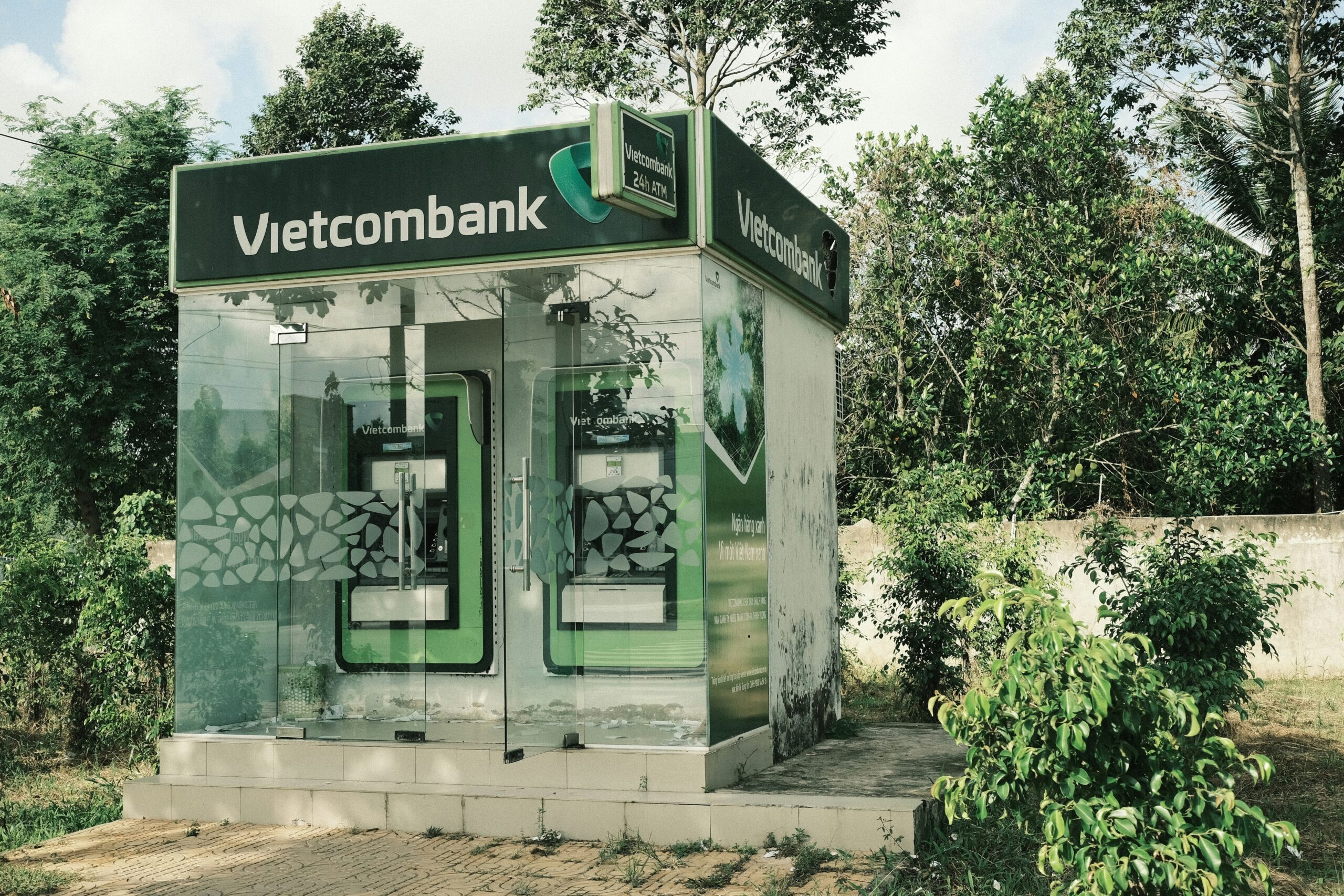
– Vietcombank ATMs: generally reliable, accept most international Visa/MC
– Techcombank: similar
– Sacombank, ACB, BIDV: widely available
Fee structure: Most ATMs charge a domestic fee of 30,000–60,000 VND per withdrawal ($1.20–2.50). Some machines (particularly in tourist areas) charge higher “international card” fees — usually posted on screen before you confirm. If you see a fee above 60,000 VND, try another machine.
Withdrawal limits: Most machines limit single withdrawals to 3–5 million VND ($120–200). For larger withdrawals, use multiple transactions or a bank teller.
Opening a Vietnamese Bank Account
For stays of 3+ months, a local bank account simplifies several things:
- Paying rent (many landlords prefer bank transfer over cash)
- Utility bills
- Some coworking memberships
- Receiving local payments if you do any work for Vietnamese clients
Which Bank
Vietcombank (VCB): The most foreigner-friendly. English-language interface, international-standard online banking, English-speaking staff at main branches in major cities. Most recommended.
Techcombank (TCB): Strong mobile app, popular with younger Vietnamese and expats. Good online experience.
MB Bank (Military Commercial Bank): Another option with reasonable foreigner accessibility.
Avoid: Very small local banks. Stick to the major commercial banks for reliability and English support.
Requirements (as of 2026)
- Valid passport
- Valid Vietnam visa (must have remaining validity — not expiring immediately)
- Vietnamese phone number (registered under your name — requires your SIM to be registered, which is standard)
- Proof of address (guesthouse letterhead, lease agreement, or similar)
Requirements can vary by branch and occasionally change. Call ahead or check the bank’s current requirements before visiting.
Process
Allow 1–2 hours. Go to a main branch in a major city (not a small community branch) for the best chance of an English-speaking staff member. Bring everything listed above plus copies.
Account activation typically takes 1–3 days. You’ll receive a debit card by mail within 1–2 weeks.
Sending Money Home
If you need to send money back to your home country (paying rent at home, supporting family, saving), several options:
Wise: The clearest choice. Send from your Wise account to a home-country bank account. Transparent fees, near-market exchange rates.
Western Union / MoneyGram: Available widely in Vietnam. More expensive than Wise but useful for recipients who don’t have bank accounts.
Bank transfers: Your local Vietnamese bank account can send international transfers, but fees are higher and exchange rates worse than Wise.
Cash Currency Exchange
If you arrive with foreign cash (USD is most widely accepted), you can exchange at:
- Banks: Best rates, take your passport, can be slow
- Exchange offices: Widely available in major cities, competitive rates at the better ones. Avoid airport exchange desks — the rates are significantly worse.
- Gold shops: Traditionally the go-to for Hanoi and HCMC locals for cash exchange. Often competitive rates, usually fast.
$100 USD bills exchange at better rates than smaller denominations in Vietnam. If you’re bringing cash, use large bills.
Digital Payments in Vietnam
Vietnam’s domestic payment ecosystem has grown significantly:
MoMo: The most widely used Vietnamese e-wallet. Accepted at thousands of restaurants, shops, and services. Setting it up requires a Vietnamese phone number and bank account. Worth doing for a long stay — it’s how many locals pay for daily items.
VNPay: Another major payment platform, integrated with many banks. QR codes at most mid-range restaurants and shops.
For foreign nomads: Grab Pay covers ride-hailing and some food delivery cashlessly. But for general daily spending, cash remains king.
Common Mistakes and How to Avoid Them
Arriving with only a home-country debit card. You’ll overpay on every ATM withdrawal. Set up Wise before you travel.
Not having cash. Even with good international cards, you’ll regularly be in situations where only cash works. Keep VND on hand.
Using airport currency exchange. Rates are consistently worse. Exchange at a bank or reputable exchange office in the city.
Opening an account at a small local bank. Language barriers and less reliable service. Stick to Vietcombank or Techcombank.
Not knowing ATM limits. Plan withdrawals accordingly, especially if you’re paying a large expense (monthly rent in cash) that requires multiple transactions.
→ Vietnam Visa Guide | → Cost of Living in Vietnam | → Healthcare in Vietnam