
Living in Hanoi as a Creative: Community, Culture, and What’s Possible
Hanoi doesn’t market itself to creative people the way Bali or Lisbon does. It doesn’t position itself as a hub for digital creatives or an emerging art scene in the international press. It’s louder about its history than its contemporary creative life.
This is, paradoxically, part of what makes it interesting. Hanoi’s creative scene exists on its own terms rather than for an imported audience. The art is being made here, not performed for visitors. The craft traditions are alive, not curated. The creative community is real, with its own rhythms and references.
For creative people willing to engage with the city on its own terms, Hanoi offers something rare: depth.
The Creative Landscape of Hanoi
Visual Art and Galleries
Hanoi’s contemporary art scene has deep roots in the Vietnamese Fine Arts University — one of Asia’s oldest, established in 1925 — and has produced generations of painters, sculptors, and mixed-media artists. The work coming out of this tradition is distinctive: informed by lacquer and silk traditions, by the country’s complex 20th-century history, by a visual culture that mixes French colonial and Vietnamese folk influences.
Key spaces in the Hanoi art world:
Hanoi Creative City (Zone 9): An art and creative industries complex in repurposed industrial buildings. Studios, galleries, event spaces, and workshops coexist in a compound that has become a hub for Hanoi’s independent creative community.
Vincom Center for Contemporary Art (VCCA): A major contemporary art center in central Hanoi, hosting large-scale exhibitions by Vietnamese and international artists. Free entry makes it accessible.
Small private galleries in the Old Quarter: Dozens of commercial galleries line Hàng Gai and surrounding streets. Quality varies — some show genuinely excellent contemporary work, others lean toward tourist-oriented pieces. Spend time in the better ones.
The Vietnam Museum of Fine Arts: Essential context for anyone wanting to understand Vietnamese visual culture — lacquer work, folk art, and 20th-century painting under extraordinary historical pressure.
Craft and Artisan Traditions
Hanoi is the center of a network of craft villages that have specialized in particular traditions for centuries. These are not tourist attractions — they’re working industries.
- Lụa Vạn Phúc (Vạn Phúc Silk Village): Traditional silk weaving, 8km from Hanoi. Looms still operating.
- Bát Tràng Pottery Village: Ceramic production since the 14th century, 15km from central Hanoi. Workshops where you can watch (and participate in) the process.
- Đông Hồ Folk Painting: Traditional woodblock printing village, 35km from Hanoi.
For designers, illustrators, pattern-makers, or anyone interested in material culture and craft, proximity to these traditions is a creative resource that most Western cities simply don’t have.
Music and Performance
Hanoi has a serious live music culture — jazz bars that have operated for decades, a growing independent music scene in small venues around Hoàn Kiếm, regular traditional water puppet performances at the Thăng Long Theatre. The Hà Nội Opera House stages occasional performances; the smaller venues stage them constantly.
Writing and Literature
Vietnamese literature has a rich and complex history — disrupted and reshaped by colonialism and war, but deep. For writers interested in understanding a culture through its literature, Hanoi offers access to this through bookshops (the Đinh Lễ Street book area, the Foreign Language Bookshop), university connections, and the literary culture that survives in cafés and small publishing houses.
The Creative Community for Expats and Nomads
What exists for foreign creative people living in Hanoi?
Language exchanges and cultural bridges. Hanoi’s universities attract international students and faculty, creating natural mixing points between the Vietnamese creative world and the expat community. Language exchange cafés (where Vietnamese speakers practice English with native speakers, and vice versa) are genuine community hubs.
Co-working spaces with creative communities. Circo and Cogo in particular have cultivated creative communities rather than just desk-renter populations. Events, skill-shares, and casual gatherings create a substrate for connection.
The Facebook group ecosystem. “Artists and Creatives in Hanoi,” “Expat Creatives Vietnam” — these groups are active and serve as first-contact points for new arrivals. Not a substitute for real community, but a way in.
Co-living communities. For creative people specifically seeking to live alongside a community rather than just work near one, the emerging co-living scene in Hanoi is worth watching. NextU is building in the Hanoi area (Embassy Garden and Lotus Forest) with specific attention to the creative community. Join the waitlist to hear more.
What Hanoi Does to Your Creative Work
This is anecdotal rather than empirical, but consistent enough to be worth saying: many creative people who spend serious time in Hanoi report a shift in their work.
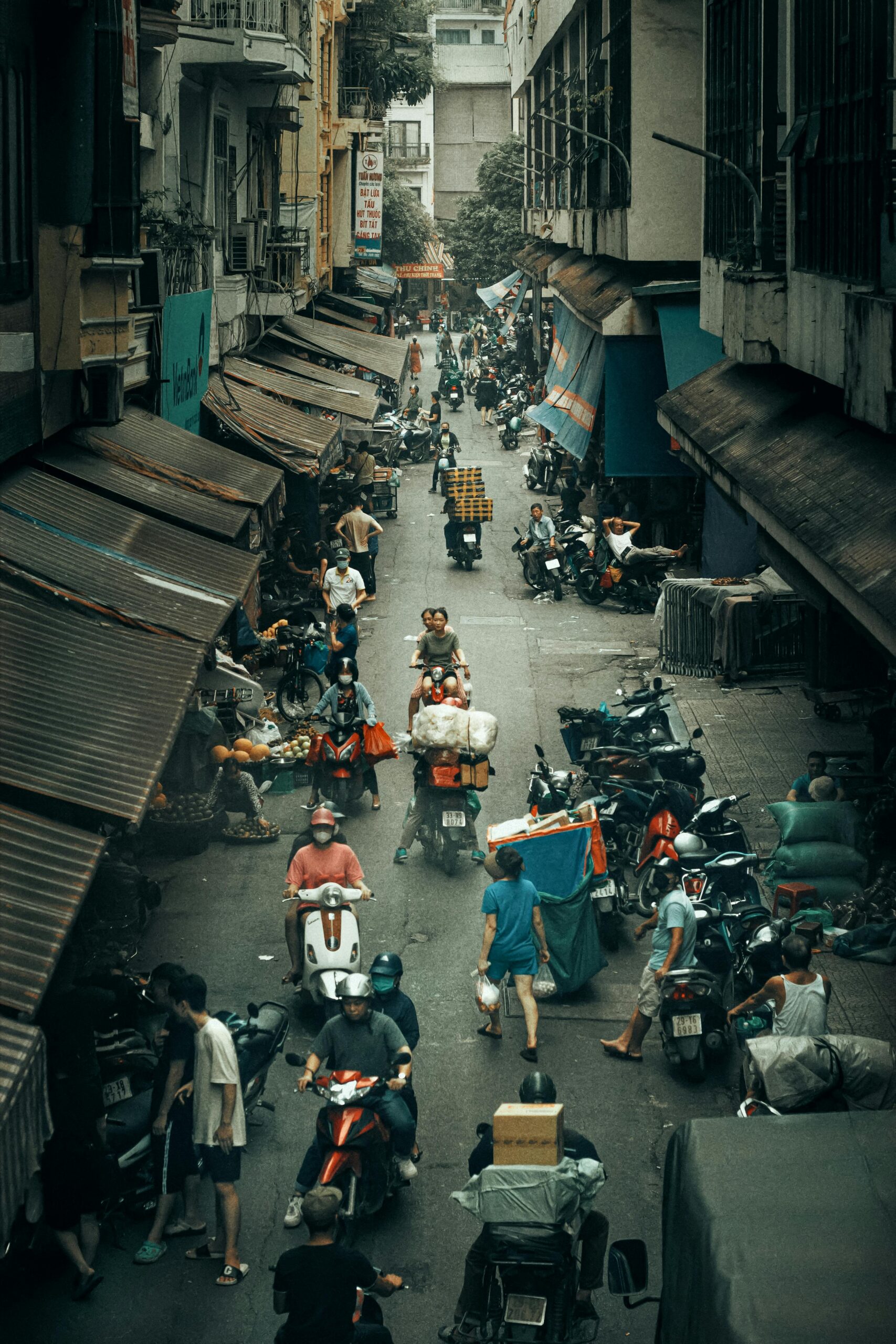
It might be the visual density — the layered quality of a city that hasn’t resolved its historical contradictions into a coherent aesthetic. French neoclassical buildings adjacent to brutalist Soviet-era apartment blocks adjacent to traditional Vietnamese tube houses adjacent to glass-fronted cafés. The city’s visual complexity forces a kind of active attention.
It might be the way time works here — the coexistence of traditional rhythms (the morning market, the midday rest, the evening street food) with modern pace. Living inside this coexistence can recalibrate your own relationship with time.
It might simply be the strangeness — being somewhere where you don’t understand most of what’s said around you, where the visual and auditory environment is genuinely foreign, creates a particular kind of attentiveness. You see more when you can’t read the signs.
Creatives who live in Hanoi long enough to move past the tourist experience into genuine residence often describe a deepened relationship with their own practice. Less distraction. More noticing.
Practical Life as a Creative in Hanoi
Accommodation for creatives. The Tây Hồ / West Lake area is the best base — quieter, more residential, with good cafés and proximity to the creative coworking spaces. Old French villas and traditional lake-side houses exist in this area at price points that would be absurd in equivalent Western cities. Budget $400–700/month for a good studio; $700–1,200 for a proper apartment.
Studio space. Studio space for visual artists, sculptors, or anyone who needs more than a desk is available in Hanoi’s creative districts — often in the Zone 9 / Hanoi Creative City area or in former industrial buildings being converted. Costs are low by global standards.
Supplies and materials. Hàng Gai and the surrounding streets in the Old Quarter carry silk, craft materials, paper, and art supplies. Electronics and photography equipment are widely available. Specialist materials may need to be ordered from abroad.
Cost of a creative life. A comfortable creative life in Hanoi — good apartment, studio access or good coworking, food, materials, occasional events — is achievable for $1,200–1,800/month, a fraction of what the same life would cost in Berlin, London, or New York.
The Honest Assessment
Hanoi is not perfect for every creative. The bureaucracy can be frustrating. The traffic in some neighborhoods is stressful. The language barrier requires patience and willingness to invest in some basic Vietnamese. The creative infrastructure for expats is developing rather than established.
But for creative people who are willing to engage with the city’s depth rather than its surface — who want the disorientation and richness and complexity that comes from living somewhere genuinely different — Hanoi offers more than almost anywhere in Southeast Asia.
The craft traditions, the visual culture, the historical layers, the extraordinary food, the community of people from multiple countries and disciplines who’ve been drawn here — these create conditions for creative work and growth that are genuinely rare.
→ Best Coworking Spaces in Hanoi
→ What Is Intentional Living?
NextU is building community co-living in Hanoi for creative people who want to live and work alongside others doing meaningful things. Join the waitlist.